
Full licence test guide
Tasks assessment items
Each task assessment item assesses one aspect of driving performance during the execution of an assessable task at a specific location on the test route. For example, observation might be assessed when turning Left from Smith Street into Jones Road.
Task assessment items are not assessed while driving between assessable driving tasks. They contribute to the applicant’s point score
for the test.
There are six task assessment items that may be assigned to an assessable task as follows:
- observation
- signalling
- gap selection
- following distance
- hazard detection
- hazard response.
Observation – explanation
Safe, effective driving is achieved when drivers observe and assess the ever changing driving environment in front of, to both sides and to the rear of their vehicles. Throughout the test the applicant must demonstrate thorough observation skills. This includes using mirrors and performing head checks (as appropriate).
Observation – requirements
- Maintains a continuous lookout ahead of the vehicle, except when making brief checks of the mirrors and other directions.
- When driving straight, checks the mirrors often enough to maintain awareness of surrounding traffic. The required frequency varies with traffic conditions.
- When required to give way to other traffic (such as when facing a Give Way sign, turning across oncoming traffic, approaching a pedestrian crossing or entering a roundabout), looks in the direction(s) from which conflicting traffic (or pedestrians) might approach before proceeding.
- Checks the relevant mirror(s) immediately before braking.
- Prior to turning or diverging (including when entering or crossing a special vehicle lane in preparation for a right turn):
- checks the relevant mirror(s) immediately before signalling
- performs a head check immediately before moving laterally (if appropriate).
- When turning, looks in the planned direction of travel (ie in the direction of the turn) before making the turn.
- Prior to driving over a railway crossing, looks in both directions for approaching rail vehicles.
Signalling – explanation
Communication with other road users is an important aspect of safely sharing the road. A vehicle’s indicators provide the main means of
communicating a driver’s intention to change direction. The applicant needs to demonstrate their ability to apply the appropriate signals throughout the test, irrespective of traffic conditions.
Signalling – requirements
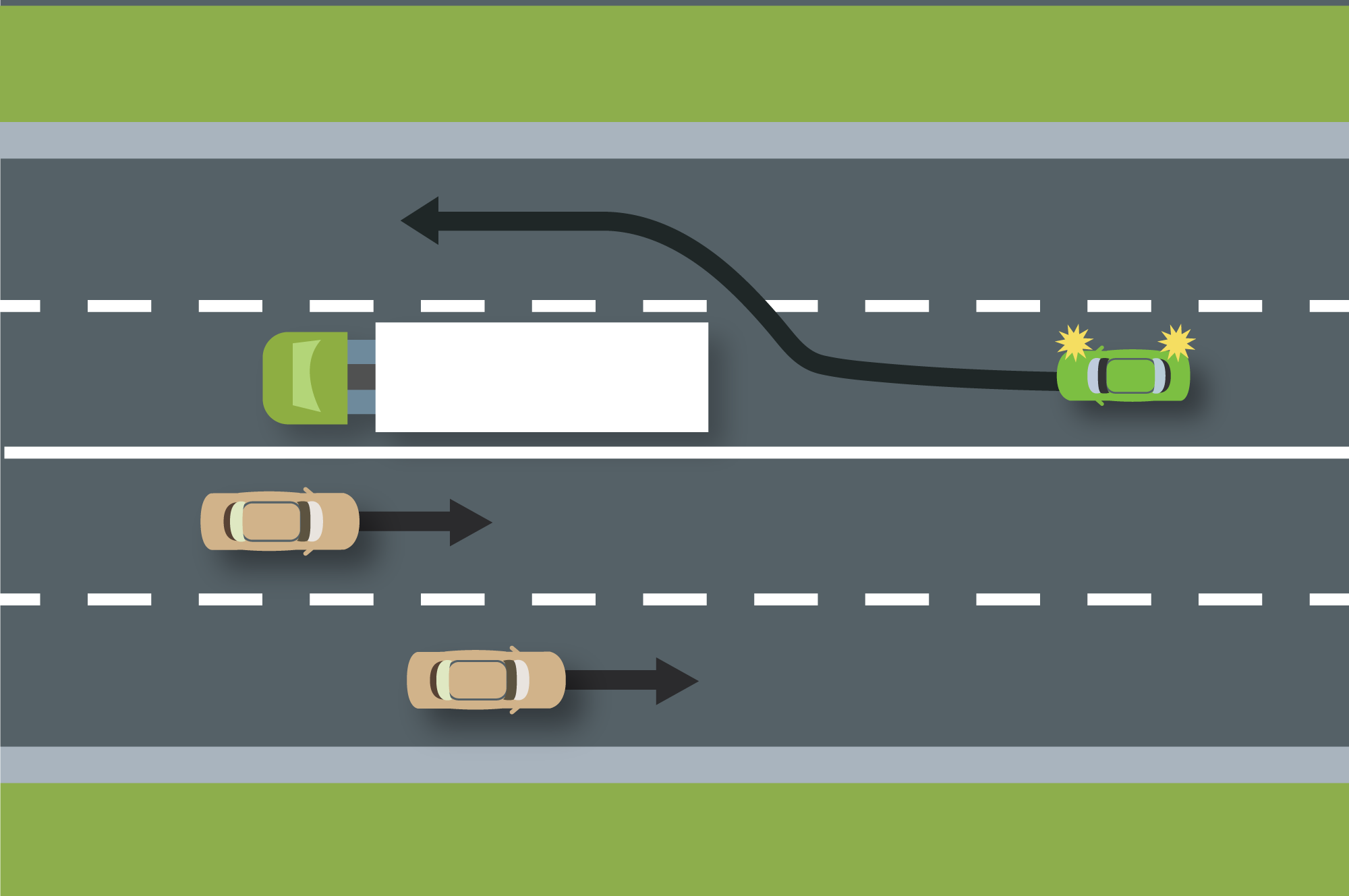
- Activates the turn indicator for the appropriate direction (right or left) for at least three seconds (even if no other traffic is present) before:
- turning
- pulling out from the kerb
- pulling into the kerb
- changing lanes
- diverging right or left by at least the width of the car (other than pulling out from the kerb)
- diverging by less than the width of the car in circumstances where it is necessary to warn other road users of the intended movement (eg to indicate that the applicant intends to overtake a parked car before allowing an oncoming vehicle to pass).
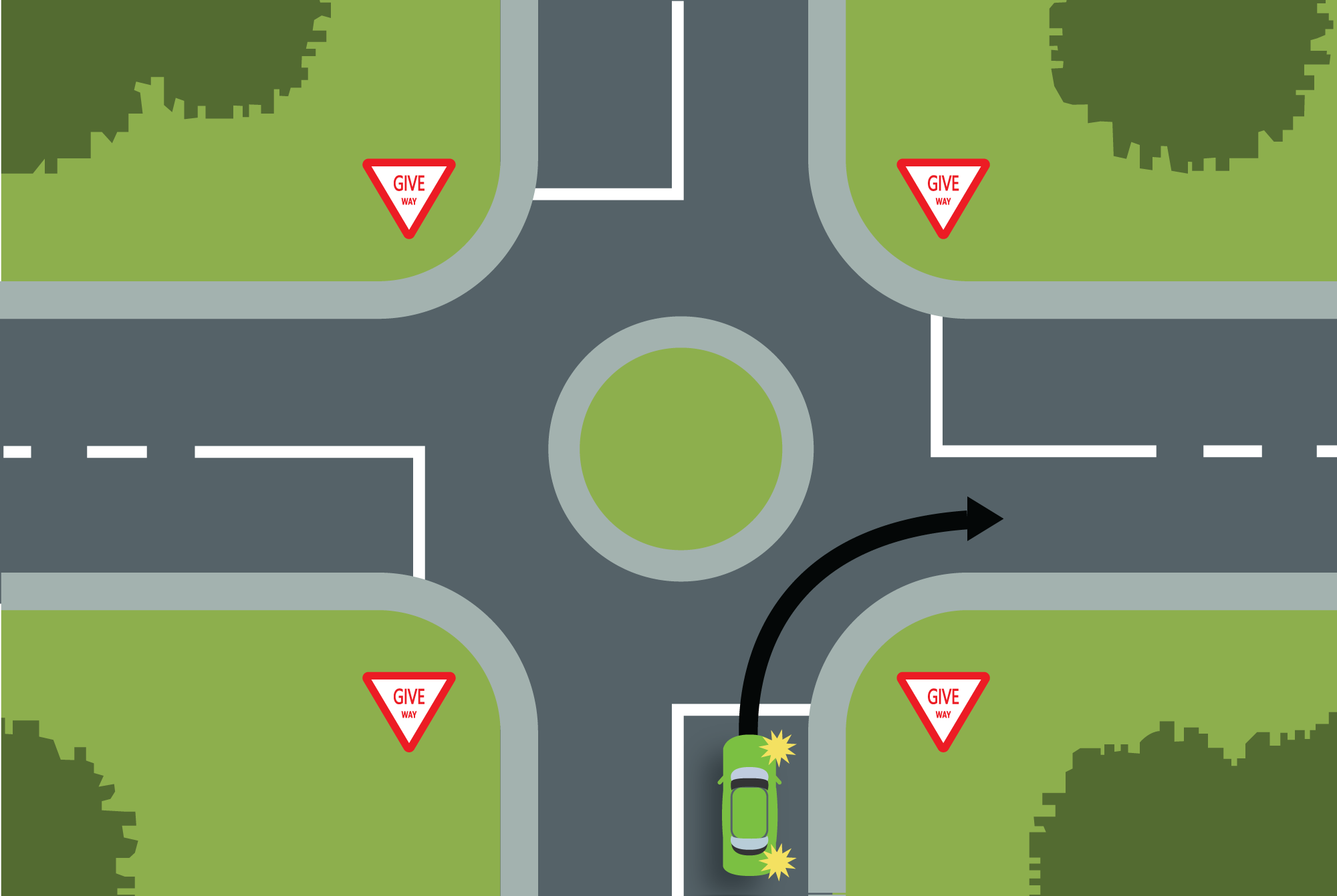
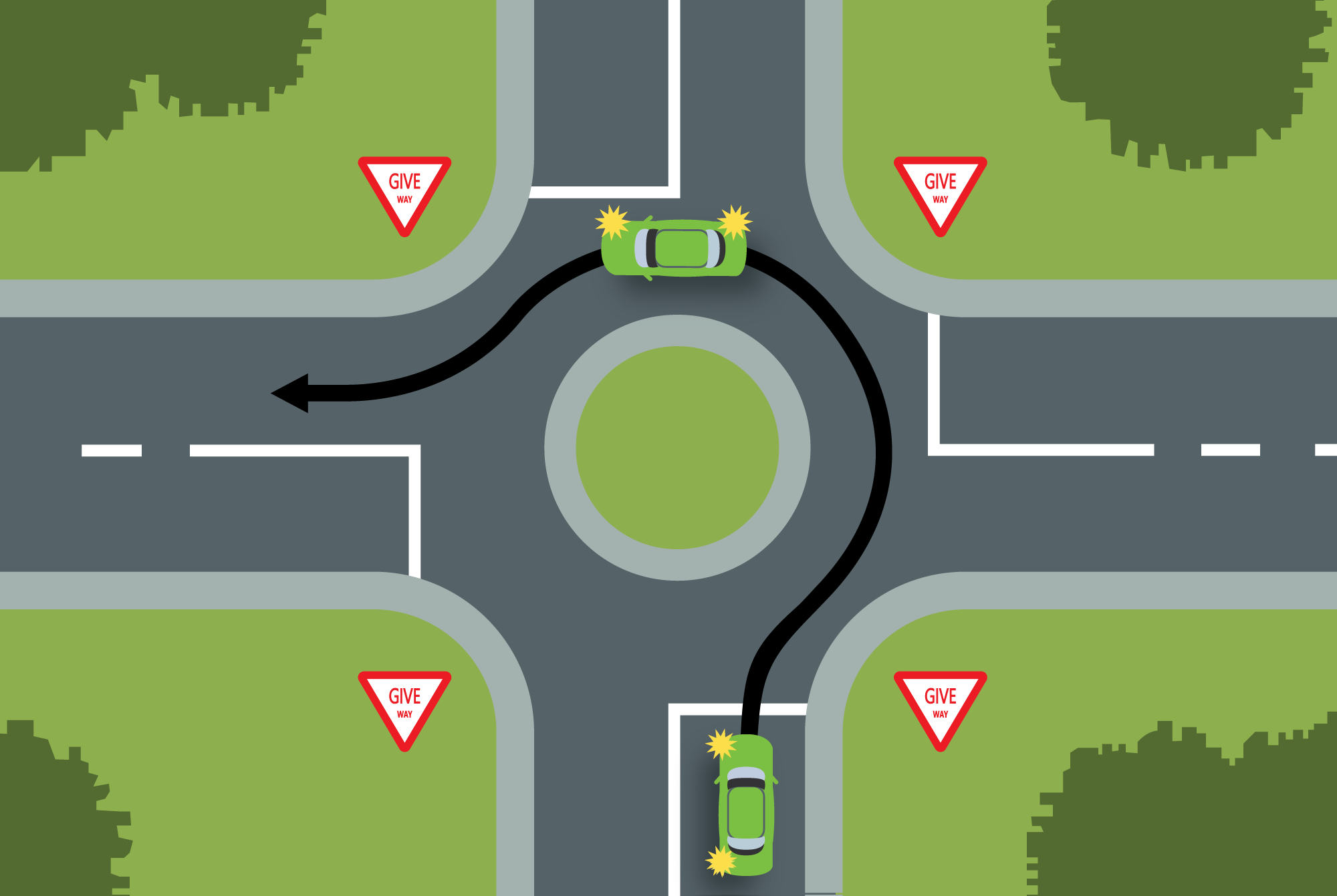
- When turning at a roundabout:
- activates the turn indicator in the appropriate direction (right or left) for at least three seconds prior to entering the roundabout
- activates the right turn indicator before leaving the roundabout.
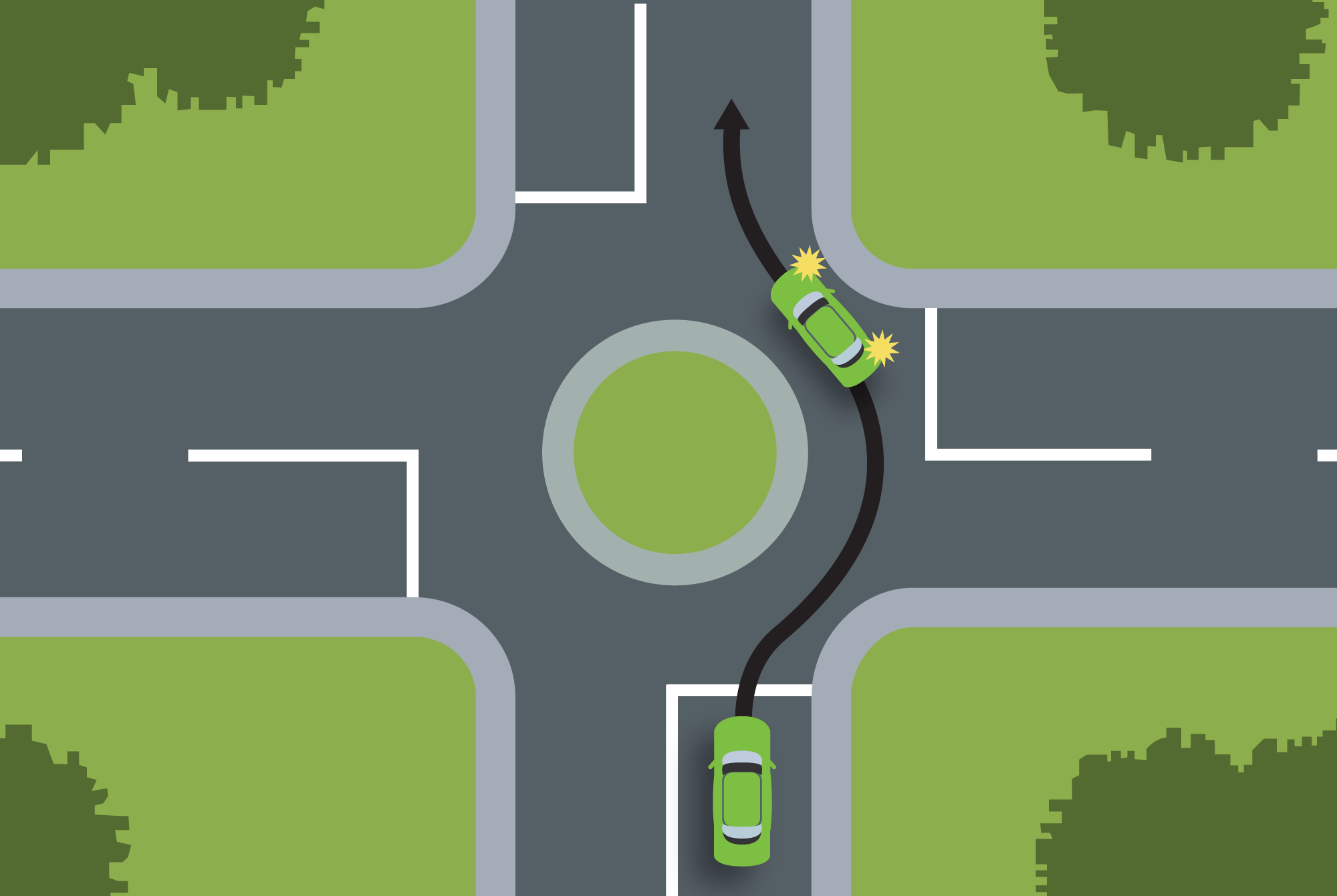
- When travelling straight ahead at a roundabout:
- does not signal prior to entering the roundabout
- activates the right turn indicator before leaving the roundabout.
- When turning right or left, does not activate the turn indicator so early as to possibly mislead other road users about which street the
applicant intends to turn into. - Maintains the turn signal until the turn or diverge has been completed.
- Cancels the turn indicator if necessary when the turn or diverge has been completed.
Gap selection - explanation
Correct gap selection should allow any manoeuvre to be completed safely without causing other road users to adjust their speed or direction.
Drivers who reject safe gaps cause increased congestion and delays, leading to frustration for other road users. The applicant must demonstrate safe and appropriate gap selection consistently throughout the test.
Gap selection – requirements
- Selects the first available safe gap in traffic after an initial period of observing approaching traffic to identify a gap.
- Rejects any unsafe gaps.
Following distance - explanation
The applicant needs to maintain a safe following distance between the car being driven and the vehicle in front by applying the appropriate two or four second rules throughout the test.
Following distance – requirements
- When driving straight in good conditions, maintains a following distance of at least 2 seconds behind the vehicle ahead.
- When driving straight in poor conditions (eg on a wet or unsealed road), maintains a following distance of at least 4 seconds behind the vehicle ahead.
- After changing lanes, resumes the applicable following distance (2 or 4 seconds, depending on conditions) behind the vehicle in front as soon as practicable.
Hazard detection and hazard response - explanation
The purpose of these assessable items is to enable the applicant to demonstrate their higher order skills in hazard detection and response while at the same time maintaining a polished driving performance.
Hazard detection and hazard response - requirements
While driving through each of the assessable tasks the applicant is required to verbally describe (in a few simple words):
- the hazards they detect,
- and the actions they would take in response to the hazards.
An example of this would be:
- on detecting oncoming traffic, the applicant would then say that the oncoming traffic is a hazard
- their response could be to say that they will steer slightly right to maintain a safe clearance.
A hazard is anything moving or potentially moving that poses a clear and direct threat to the applicant in carrying out the driving manoeuvre. It therefore requires a driving response from the applicant. In other words a hazard is something that the applicant could realistically have a collision with in carrying out the manoeuvre. The decision as to whether something is a hazard must be made in the context of the manoeuvre being completed.
Hazards include:
- pedestrians (from the right, left or ahead)
- other motor vehicles (from the right, left, ahead, behind or oncoming)
- other road users such as cyclists (to the right, left, ahead or behind or oncoming).
Hazards do not include:
- static objects such as protruding hedges, road signs, parked vehicles without occupants
- road features such as intersections, merge lanes etc
- pedestrians walking away from the intended path of the applicant’s vehicle
- vehicles that have cleared the intersection before the applicant arrives there.