
About Driver Licence
iTrans driver licensing system
Why we have driver licences?
iTrans has driver licensing system to make sure that everyone who drives on our roads has the skills and knowledge necessary to be a safe driver. The safer drivers are, the safer our roads will be.
A licence to drive a motor vehicle is a privilege that is only given to people who pass the driver licence tests and demonstrate respect for the rights and safety of others.
Photo driver licences help identify drivers. They are one of the best ways to catch unlicensed and disqualified drivers.
Licences with photo help the police to check that new and inexperienced drivers (people on learner licences) don’t break the conditions of their licence.

Driver identity side
This side of your licence contains driver identity information and shows:
- your Photograph
- your Signature
- your address (if you have chosen to have this printed on your licence)
- your date of birth
- your licence number (this number in unique to you and stays the same each time you renew your licence)
- your card version number (this number changes each time you are issued with a new licence
- if you have indicated your willingness to be an organ donor.
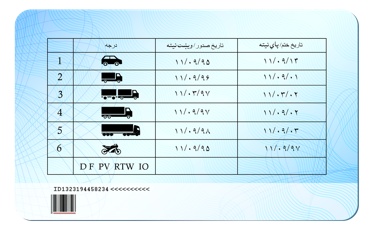
Driving Entitlement Side
- the licence classes you hold.
- the issue and expiry date of each licence class .
- the licence endorsement you hold .
- the expiry date of each licence endorsement.
- any licence conditions (eg must wear correcting lenses)
NOTE: any conditions listed will apply to all licence classes and endorsements unless other wise specified.
Licence conditions
If your licence is issued with conditions on it you must follow them when you drive.
The reason some people have conditions on their licence is because they may not be a safe driver unless they follow the conditions. If you do not follow the conditions you could be issued with a ticket and receive a demerit points and a fine.
A common example of a licence condition is that every driver must wear correcting lenses when they drive. Other conditions include driving only automatic vehicles or driving only specially adapted vehicles. Licence conditions are printed on the driving entitlement side of your photo driver licence.
NOTE: additional conditions that must be followed by drivers on a learner licence are not recorded on the driving entitlement side of your licence. See Stage 1- Learner licence for details of learner licence conditions.
Classes of driver licence
To drive a car you will need to get a Class 1 licence, but there are actually six classes of licence in iTrans transport solutions. Each class covers different types and weights of vehicle. That’s because the skills you need to drive a car are different from the skills you need to drivea heavy vehicle or motorcycle.
You can apply for a Class 6 (motorcycle) licence or a Class 1 (car) licence without holding any other class of licence. But if you want a class 2, 3, 4 or 5 licence, you will need to get a full Class 1 licence first.Class 1 – Car
A holder of a class 1 learner licence can drive:
- a vehicle that has a gross laden weight (GLW) or gross combined weight (GCW) of not more than 4,500kg (this includes tractors or combination vehicles, but does not include motorcycles)
- a moped or all-terrain vehicle.
- any motorhome or tradeperson’s vehicle with GLW of not more than 6,000kg and an on road weight not exceeding 4,500kg.
A holder of a class 1 full licence can drive:
- a vehicle that has a GLW or GCW of not more than 6,000kg (this includes tractors or combination vehicles, but does not include motorcycles)
- a moped or all-terrain vehicle.
- aTractor with GLW of more than 6,000kg but not more than 18,000kg if driven at a speed not exceeding 30km/h.
- a tractor/trailer combination with a GCW of more than 6,000kg but not more than 25,000kg if being used in non-agricultural land management operations and driven at a speed not exceeding 30km/h
- an agricultural tractor with a GLW of not more than 18,000kg or an agricultural tractor/ agricultural trailer combination with a GCW of not more than 25,000kg if driven at a speed not exceeding 40km/h.
A Class 1 full licence with an F endorsement will permit you to operate a forklift with a GLW of not more than 18,000kg.
A Class 1 full licence with an R endorsement will permit you to operate special-type vehicle that runs on rollers with a GLW of not more than 18,000kg.
A Class 1 full licence with a T endorsement will permit you to operate a special-type vehicle that runs on tracks with GLW of not more than 18,000kg.
A class 1 full licence with a W endorsement will permit you to operate special-type wheeled vehicles:
- with a GLW not more than 6,000kg.
- with a GLW more than 6,000kg but not more than 18,000kg if driven at speed not exceeding:
- 40km/h, if the vehicle is an agricultural motor vehicle
- 30km/h, for any other special-type wheeled vehicle.
A class 1 full licence with an F,R,T or W endorsement will also permit to operate:
- an agricultural tractor with GLW of not more than 18,000kg or
- acombination agricultural tractor/agricultural trailer with a GCW of not more than 25,000kg.
Class 2 – Medium Rigid Vehicle
Class 2 is the medium rigid vehicle licence. A holder of a Class 2 learner or full licence can drive:
- a rigid vehicle (including any tractor) with a GLW of more than 6,000kg but not more than 18,000kg.
- a combination vehicle (that is not a tractor/trailer combination) with a GCW of not more than 12,000kg.
- a combination vehicle (that is not a tractor) consisting of a rigid vehicle with a GLW of not more than 18,000kg towing a light trailer ( GLW of not more than 3,500kg)
- a rigid vehicle with a GLW of more than 18,000kg that has not more than two axles.
- a vehicle covered in Class 1 .
- aTractor with a GLW of more than 6,000kg but not more than 18,000kg, if driven at a speed over 30km/h.
In addition, a holder of a class 2 full licence can also drive a special-type agricultural motor vehicle that runs on wheels with a GLW of not more than 18000kg if driven at a speed not exceeding 40km/h. Note that a W endorsement is not required.
A Class 2 full licence with an F endorsement will permit you to operate a forklift with a GLW exceeding 18,000kg.
A Class 2 full licence with an R endorsement will permit you to operate a special-type vehicle that runs on rollers with a GLW exceeding 18,000kg.
A Class 2 full licence with a T endorsement will permit you to operate a special-type vehicle that runs on tracks with a GLW exceeding 18,000kg.
A Class 2 full licence with a W endorsement will permit you to operate a special-type wheeled vehicle :
- with a GLW of not more than 18,000kg if driven at a speed exceeding 30km/h
- with a GLW of more than 18,000kg if driven at a speed not exceeding 30km/h.
Class 4 – Heavy rigid vehicle
Class 4 is the heavy rigid vehicle licence. A holder of a Class 4 leaner or full licence can drive:
- a rigid vehicle (including any tractor) with a GLW of more than 18,000kg.
- a combination vehicle consisting of a rigid vehicle with a GLW of more than 18,000kg towing a light trailer.
- vehicles covered in Class 1 , Class 2 , but not Class 3 .
A Class 4 full licence with a W endorsement will permit you to operate a special-type wheeled vehicle with a GLW exceeding 18,000kg.
Class 6 – Motorcycle
Class 6 is the motorcycle licence. The holder of a Class 6 learner can ride a LAMS-approved motorcycle or any moped or all-terrain vehicle.
The holder of a Class 6 full licence can ride any motorcycle, moped or all-terrain vehicle .
Certain kinds of vehicles require you to have a licence endorsement , as well as having the correct class of licence, before you can drive them. Some examples are special-type vehicles, passenger service and tow trucks. See the following definitions for more information.
Notes
Holders of Class 2 And Class 4 licences are allowed to tow light trailers behind rigid vehicles of those classes. Don’t count the weight of the trailer in any GCW calculations.
An articulated special-type vehicle can be driven on a Class 2 or Class 4 licence, depending on its weight. This is because its handling characteristics are determined by it being a special-type vehicle, not because it’s articulated.
If you’re a tractor driver, you simply need to hold the right class of licence for the weight of the tractor. You don’t need a W or any other special-type endorsement .
Definitions
All-terrain vehicle means a special-purpose vehicle (with or without motorcycle controls and equipment) that:
is principally designed for off-road use.
- has three or more wheels.
- has an engine capacity exceeding 50ml, and
- has a gross weight of less than 1,000kg.
Gross laden weight (GLW) is the greatest of the following:
- any weight specified (following the latest modification, if applicable) as a vehicle’s GLW by the vehicle’s manufacturer.
- any weight specified as a GLW of a particular vehicle (or a vehicle of its kind) by the iTrans transport solutions.
- the weight of a vehicle together with any load it is carrying, including any equipment and accessories.
Gross combined weight (GCW) is the sum of the GLW of the vehicles that make up a combinations vehicle.
Light Trailer means a trailer with a GLW which does not exceed 3,500kg.
On-road weight means the total weight of the vehicle and load at any particular time.
Special-type vehicles are motor vehicles that are forklifts or vehicles that run on rollers or self-laying tracks. It also includes motor vehicles that run on wheels but that aren’t passenger vehicles, trade vehicles, tractors, fire engines or vehicle recovery vehicles.
Tractor means a motor vehicle (other than a traction engine) designed principally for traction at speeds not exceeding 50km/h.
Important :
You must carry your driver licence with you at all times when driving. Drivers are required by the law to produce their driver licence to an enforcement officer on request.
Licence endorsements
To safely drive some kind of vehicles, or to provide certain kinds of services, you need to have special knowledge or training.
A licence endorsement on your driver licence shows that you have completed whatever courses or qualifications you need for that endorsement. The types of endorsement you can get on your iTrans driver licence, and what they allow you to do, are shown in the table below.
| Endorsement | Allows You to |
|---|---|
| D | Drive a vehicle that is carrying dangerous goods |
| F | Drive a forklift |
| I | Be a driving instructor |
| O | Be a driver testing officer |
| P | Drive a passenger service vehicle, eg a bus or taxi |
| R | Drive a special-type vehicle that runs on rollers |
| T | Drive a special-type vehicle that runs on tracks |
| V | Drive a tow truck |
| W | Drive a special-type vehicle that runs on wheels |
To find out how to apply for endorsements, phone the iTrans driver licensing contact center on +93 20 221 2413 or visit the licence endorsements section of our website.
One photo driver licence for all classes and endorsements.
Rather than getting an extra driver licence every time you get a new class of licence or new licence endorsement, you will be issued new licence that lists all your classes of licence and any endorsements.
This way you only need to carry one licence.